Social media has become an essential communication channel for brands. But with so many platforms, formats and trends, it can be difficult to know where to focus.
– Should businesses invest in professional video production or create more spontaneous content with their phones?
– How important are likes and followers?
– And how can a brand find interesting things to share when it feels like it has nothing to say?
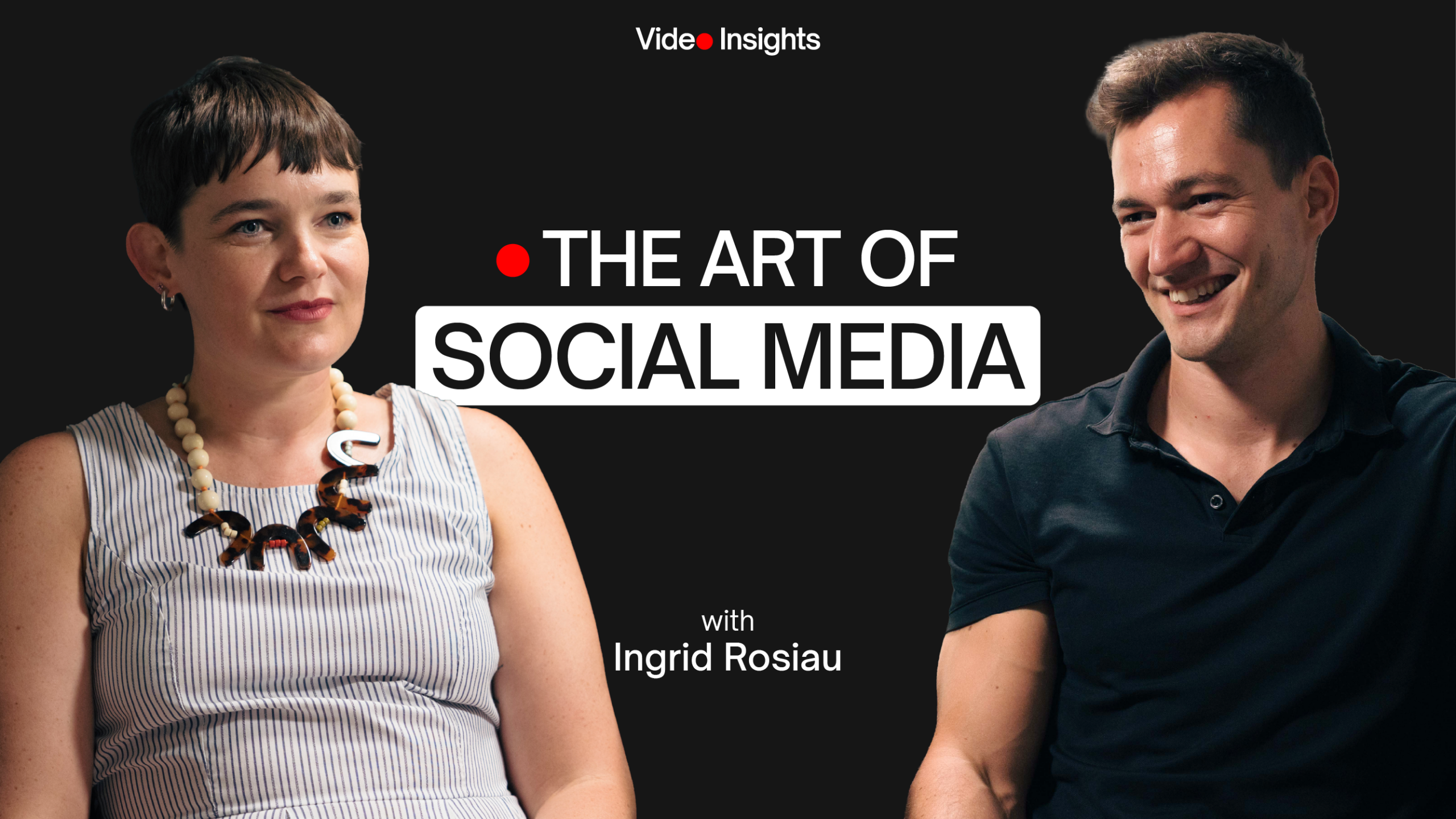
For this episode of Video Insights, I spoke with Ingrid Rosiau, a social media manager working with architects, designers, artists and creative brands.
We discussed social media strategy, storytelling, video content, changing formats and the growing role of AI.
1. Social Media Is More Than Just Posting Content
One of the first points Ingrid makes is the difference between generating immediate results and building a brand over time.
Paid advertising can help reach specific audiences and drive conversions. Organic content, on the other hand, also plays an important role in developing a brand’s identity, building trust and creating a connection with potential customers.
Someone might discover a brand today, follow its content for several months and only decide to buy something much later.
This is why a social media strategy shouldn’t focus exclusively on immediate sales.
Look Beyond Likes
Social media also gives businesses access to detailed performance data. But not every metric tells the same story.
Ingrid explains that likes are not necessarily the most useful indicator of success. Depending on the objective, other metrics can be more meaningful:
– Reach and views: How many people discovered the content?
– Shares and saves: Did people find it interesting or useful enough to keep or share?
– New followers: Did the content encourage people to connect with the brand?
– Website visits and conversions: Did it lead to a concrete action?
The important question is not simply whether a post performed well, but whether it helped achieve the intended objective.
2. Every Business Has a Story to Tell
One of the points I found particularly interesting in our conversation was how many businesses believe they have nothing worth sharing on social media.
Ingrid gives the example of a carpenter who might say:
“I have nothing to talk about. I just work with wood.”
But as she explains, there are plenty of questions worth asking. Where does the wood come from? What types of wood does he use? How does he work with the materials?
What seems completely ordinary to someone doing the same job every day can actually be fascinating to an outside audience.
And that’s where a social media manager can bring a different perspective. As Ingrid puts it, “Of course you have things to talk about. You just don’t know what to say yet.”
The challenge isn’t necessarily creating something new to communicate. Sometimes it’s simply recognizing the stories that are already there.
Look Behind the Product
Social media gives brands the opportunity to communicate much more than their products or services. It can be a way to introduce the people behind a business, explain a process, show craftsmanship or share the values that guide the company.
Sometimes the challenge isn’t finding something interesting to say. It’s recognizing that what feels ordinary to you might be interesting to your audience.
This is also where an outside perspective can help: someone who isn’t involved in the daily work may notice stories that the business itself overlooks.
3. What Makes Video Content Work on Social Media?
Video is one of the main formats brands use to communicate online, but there’s no single formula that works for everyone.
Ingrid emphasizes the importance of choosing formats according to the brand, its audience and its objectives.
A short Reel, an educational carousel and a more detailed video can all have a place in the same content strategy.
Capture Attention Early
When we discussed short-form video, Ingrid highlighted how important the opening seconds have become.
People scroll quickly, so the video needs to give them a reason to keep watching almost immediately.
A clear opening, subtitles and a format adapted to the platform can all help make content easier to consume.
But formats and viewing habits continue to change. Ingrid also mentions seeing more horizontal, cinematic videos appearing again on social platforms.
Rather than following a fixed formula, brands need to pay attention to how their audiences consume content.
Don't Follow Every Trend
Trends can offer interesting creative opportunities, but they don’t automatically make sense for every brand.
Ingrid’s advice is to ask whether a trend actually fits the brand’s identity and audience before using it.
A humorous format that works perfectly for one business might feel completely out of place for another.
The goal isn’t to participate in every trend. It’s to create content that feels consistent with the brand and communicates something meaningful.
4. Smartphone Videos or Professional Production?
For Ingrid, the two approaches are complementary. Spontaneous smartphone videos work well for Stories, behind-the-scenes content and everyday moments.
But brands also need professional production to reflect the quality of their work, especially in fields like design and craftsmanship.
As she puts it: “You can be Dior, but if your content looks like Lidl…”
The key is finding the right balance between authentic, spontaneous content and more polished productions, depending on what the brand wants to communicate.
5. AI, Authenticity and Quality Over Quantity
We also discussed the increasing use of artificial intelligence in content creation. Ingrid already uses AI for tasks such as analysis, copywriting and supporting her daily work.
She also recognizes the opportunities it creates for smaller businesses, which can now develop certain types of content with fewer resources.
At the same time, she’s more cautious about fully AI-generated visual campaigns, particularly when they replace the human and creative work behind photography and video production.
For brands working with craftsmanship, design and creative expertise, that human element can be an important part of their identity.
Create Less, but Better
Another point Ingrid makes is that brands sometimes focus too much on producing large quantities of content.
Publishing regularly is important, but creating more content doesn’t automatically mean communicating better.
A smaller number of relevant, well-considered posts or videos can be more valuable than producing content simply to maintain a publishing schedule.
The same principle applies to AI, trends and new formats: they should support a clear communication objective rather than become the objective themselves.
Want to go deeper?
Good social media content isn’t necessarily about following the latest trends or publishing as much as possible. As Ingrid points out throughout our conversation, it’s about understanding your brand, finding the stories worth telling and choosing the right formats to share them.
Whether it’s a spontaneous smartphone video or a more polished production, what matters is having a clear idea behind the content and knowing who you’re trying to reach.
Watch the full interview with Ingrid Rosiau for more practical examples and insights on social media strategy, storytelling and video content creation.
You can also discover more Video Insights interviews, with professionals sharing practical advice on video production, storytelling, marketing, audio, lighting, presenting on camera and more.
SHARE THIS POST